International shippingWe ship your orders within 2 to 7 days after receiving payment. The approximate delivery time for your order is 7 to 21 days.Payment for goodsThe site accepts cash payments or full prepayment to our European bank account.Return policyIn accordance with current legislation, goods that meet quality requirements cannot be exchanged or returned.Protection against counterfeitingEvery product on our website is original and has a code that allows you to verify its authenticity on the manufacturer's website.
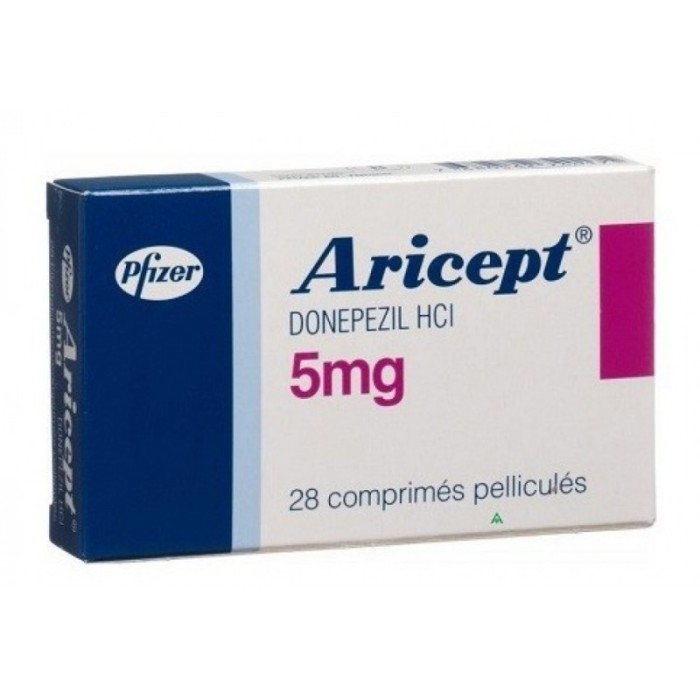
Introducing Aricept 5 Pfizer: A Focus on Alzheimer's Treatment
Aricept 5 Pfizer is a well-known medication specifically formulated for the management of Alzheimer's disease. As a prescription drug, it is utilized to treat mild to moderate stages of this progressive neurodegenerative disorder. The primary purpose of Aricept is to improve cognitive function and overall quality of life for individuals experiencing symptoms associated with Alzheimer’s disease. By inhibiting an enzyme called acetylcholinesterase, Aricept helps increase levels of acetylcholine in the brain, a neurotransmitter essential for memory and learning. This pharmacological action aims to slow the decline of cognitive abilities, granting patients prolonged periods of functionality and independence.
Who Typically Uses Aricept 5 Pfizer and When is it Prescribed?
The typical users of Aricept 5 Pfizer are primarily older adults diagnosed with mild to moderate Alzheimer's disease. This demographic is often characterized by gradual memory loss, confusion, and difficulty in conducting routine tasks, which can significantly impact their daily living and social engagement. Aricept is prescribed not only to patients with Alzheimer's but may also be considered for individuals with other types of dementia exhibiting similar cognitive impairment. Additionally, caregivers and healthcare providers play a critical role in the identification and management of symptoms that prompt the prescription of this medication.
Contexts where Aricept is applied often include long-term care facilities, assisted living environments, and outpatient settings. These environments allow for consistent monitoring of the patient's response to the medication, making adjustments as necessary based on individual tolerance and therapeutic outcomes. Moreover, discussions surrounding Aricept's usage often encompass a holistic approach that includes lifestyle support, cognitive therapies, and regular assessments to optimize patient care and enhance overall well-being.
The Strengths of Aricept 5 Pfizer: A Comparative Analysis
Aricept 5 Pfizer stands out among available treatments for Alzheimer's disease due to several unique characteristics. One of its primary strengths is its non-invasive administration method, taken orally in tablet form, which simplifies dosing for patients and caregivers. Compared to other medications in its class, such as Rivastigmine (Exelon) and Galantamine (Razadyne), Aricept has been extensively studied and documented in clinical trials, leading to a more robust understanding of its efficacy and safety profile.
Another distinguishing feature is its long half-life, which allows for once-daily administration. This convenience can greatly enhance patient adherence to the treatment regimen. Furthermore, Aricept has consistently demonstrated a favorable safety profile with manageable side effects, which reinforces its appeal among both patients and healthcare providers. The availability of different dosages, including 10 mg and 23 mg formulations, provides flexibility in managing individual patient needs based on their progression of symptoms.
Benefits of Aricept 5 Pfizer: Key Advantages
When considering Aricept 5 Pfizer, it is important to weigh its benefits against potential risks. Here are several key advantages that this medication provides:
Enhancement of cognitive function: Aricept 5 Pfizer aids in improving memory and thinking skills among patients, thereby promoting a better quality of life.
Slower progression of symptoms: Regular use of Aricept can ultimately delay the advance of Alzheimer's disease symptoms, prolonging patient independence.
Easy administration: As a once-daily oral tablet, it simplifies medication management for both patients and caregivers.
Well-characterized safety profile: Clinical studies reveal that Aricept generally has mild side effects, which can be easily monitored and managed.
Flexible dosing options: Available in various strengths, Aricept enables healthcare providers to tailor treatment plans to individual patient needs.
The benefits of Aricept 5 Pfizer make it a valuable tool in the management of Alzheimer's disease, facilitating not only cognitive improvements but also enhanced overall patient well-being.
Important Considerations Before Using Aricept 5 Pfizer
Before initiating treatment with Aricept 5 Pfizer, several important considerations must be taken into account. First and foremost, potential contraindications should be reviewed thoroughly. Patients with a known allergy to Donepezil, the active ingredient in Aricept, should avoid this medication entirely. Furthermore, individuals with certain medical conditions such as severe asthma, chronic obstructive pulmonary disease (COPD), or cardiac issues may need to consult with their healthcare provider to assess potential risks.
Additionally, it is essential to discuss existing medications with a healthcare professional, as drug interactions can occur. This includes over-the-counter drugs and herbal supplements. Patients should also be informed about the potential side effects of the medication, which can include nausea, diarrhea, insomnia, muscle cramps, and fatigue. Monitoring and communication between the patient, caregivers, and healthcare team are crucial for managing any adverse effects that may arise during treatment.
In conclusion, while Aricept 5 Pfizer has significant benefits in the treatment of Alzheimer's disease, a comprehensive evaluation of individual health conditions and medication history is paramount to ensure safe and effective use.